

where we lend
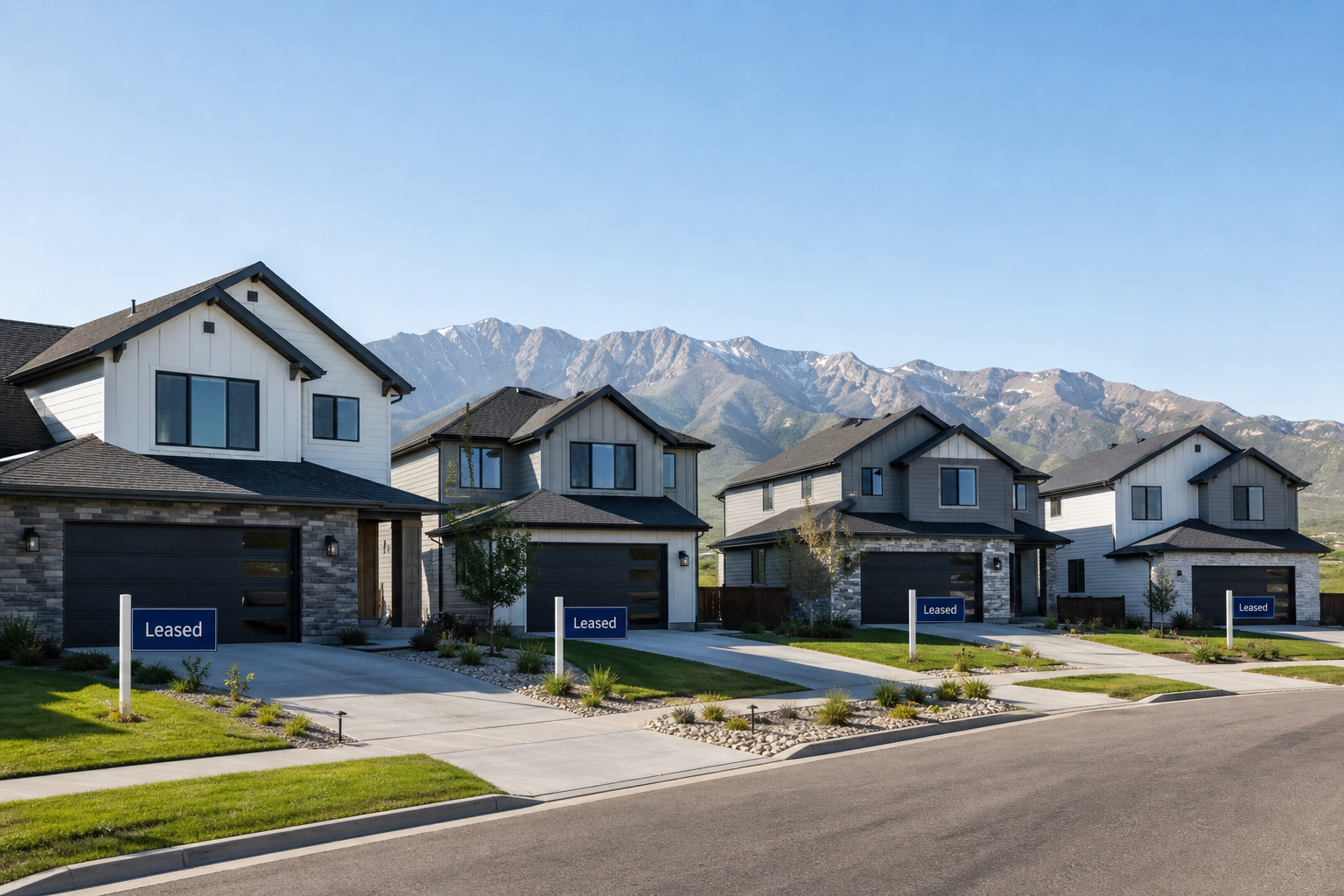

Pairing a DSCR loan with a cost segregation study lets a build-to-rent investor use leverage to buy more property and depreciation to shelter the income that property produces. One strategy grows the portfolio; the other shrinks the tax bill. Used together, they can turn a modest cash investment into a large asset base with a first-year paper loss.
I recently closed on four new build-to-rent homes in Denver using exactly this playbook.
Below I walk through the real numbers, why the financing worked, and what a cost segregation report can do on a portfolio like this.
We bought four homes for $1,929,500 against a combined as-is value of $2,270,000, bringing $486,355 to close. Every home was purchased at 85% of its as-is value, financed at 75% loan-to-cost, and had a lease in place at closing.
| Property | Purchase price | As-is value | Last list price | Loan amount (75%) | Cash to close | Leased |
|---|---|---|---|---|---|---|
| Property #1, Denver, CO 80220 | $493,000 | $580,000 | $600,000 | $369,750 | $124,245 | Yes |
| Property #2, Denver, CO 80220 | $467,500 | $550,000 | $600,000 | $350,625 | $117,870 | Yes |
| Property #3, Denver, CO 80220 | $484,500 | $570,000 | $590,000 | $363,375 | $122,120 | Yes |
| Property #4, Denver, CO 80220 | $484,500 | $570,000 | $570,000 | $363,375 | $122,120 | Yes |
| Total | $1,929,500 | $2,270,000 | $2,360,000 | $1,447,125 | $486,355 | 4 of 4 |
Buying 15% below as-is value created $340,500 of equity on day one. Against the $2,360,000 combined last list price, the discount was $430,500.
Discounts like this are available because of the current market. Builders and other sellers are holding properties that can cash flow as rentals, and many are offering discounted prices to reduce their inventory and their debt burden. For an investor with financing lined up, that motivation creates the chance to buy below value and start with equity.
A DSCR loan qualifies the property, not the borrower, which is what makes it scale for build-to-rent. The lender asks one core question: does the rent cover the debt? The debt service coverage ratio answers it.
DSCR = Monthly rent ÷ (Principal + Interest + Taxes + Insurance + HOA)
A DSCR of 1.0 means the rent exactly covers the payment; many lenders look for 1.0 to 1.25 or better. Three features of this deal made the underwriting straightforward:
On this portfolio, the four leases bring in $12,350 a month against a combined PITI payment of $9,455.71, a DSCR of about 1.31.
The $485,516 down payment was funded two ways: cash from me, plus a $250,000 five-year, interest-only note to the property-owning LLC from a private investor at 8%. That note costs $1,666.67 a month.
| Monthly cash flow | Amount |
|---|---|
| Rent (4 homes) | $12,350.00 |
| Less PITI (senior DSCR loans) | ($9,455.71) |
| Less private note interest (8%, interest-only) | ($1,666.67) |
| Net cash flow | $1,227.62 |
That is roughly $14,700 a year of positive cash flow, while $1,447,125 of senior financing plus the private note let roughly half of the down payment in personal cash control $2,270,000 of appraised real estate.
A cost segregation study pulls parts of a rental home out of the 27.5-year depreciation schedule and into 5-, 7- and 15-year schedules. An engineering-based report identifies components that are not structural to the building itself.
On a new single-family rental, those components commonly include:
The reclassified short-life assets are eligible for bonus depreciation. Under the 2025 federal tax law, 100% bonus depreciation was restored for qualifying property acquired after January 19, 2025. That means the entire reclassified amount can potentially be deducted in the year the homes are placed in service, instead of spread over decades.
New construction is an especially good fit. The costs are recent and well documented, and a new build-to-rent home typically carries a full set of new appliances, finishes and site work.
The cost segregation reports on these four new builds identified $596,408 of bonus-eligible depreciation. That is 32.4% of the $1,840,100 depreciable basis, deductible in year one instead of over 27.5 years. Each home landed in a tight 31.8% to 33.5% range.
| Property | Depreciable basis | Bonus depreciation | % of basis |
|---|---|---|---|
| Property #4, Denver, CO 80220 | $461,350 | $154,666 | 33.52% |
| Property #1, Denver, CO 80220 | $460,025 | $149,875 | 32.58% |
| Property #2, Denver, CO 80220 | $460,025 | $146,144 | 31.77% |
| Property #3, Denver, CO 80220 | $458,700 | $145,723 | 31.77% |
| Total | $1,840,100 | $596,408 | 32.41% |
The homes are held in an LLC I own 100%, so the full deduction flows through to my personal return. The remaining $1,243,692 of basis still depreciates over 27.5 years, adding about $45,000 of deductions each year.
Because I qualify as a real estate professional, that loss is non-passive and can offset active income, not just rental income. At the top federal bracket of 37% plus Colorado's 4.4% flat income tax, the estimated savings are:
| Item | Amount |
|---|---|
| Bonus depreciation from cost seg | $596,408 |
| Federal tax savings (37%) | $220,671 |
| Colorado tax savings (4.4%) | $26,242 |
| Estimated combined tax savings | $246,913 |
The federal savings alone roughly equal the personal cash I put into the down payment. In other words, the tax benefit returns close to 100% of my out-of-pocket equity in year one, while the homes keep producing positive cash flow. Straight-line depreciation on the remaining building basis adds further deductions every year.
Depreciation is calculated on the full purchase price, including the portion paid with borrowed money. That is the core of the combination: the DSCR loan funded 75% of the purchase, but the investor claims depreciation on 100% of the depreciable basis.
The strategy is powerful, but the deduction is only as good as your ability to use it. Talk through these with your CPA before you order a study.
Swell Real Estate Group finances investors who want to scale rental portfolios on the cash flow of the property, not their tax returns. If you are buying rentals, we can help you size a DSCR loan and structure the deal so your tax strategy and your financing work together. Plus we will connect you with our preferred cost segregation engineer who provide our clients with reduced rate on cost segregation reports.
Contact Swell Real Estate Group to talk through your next rental property acquisition or refinance.
Disclaimer: This article is for general educational purposes only and is not tax, legal or investment advice. Tax savings figures are estimates that assume the full deduction is usable at the top federal and Colorado rates. Tax outcomes depend on your individual circumstances and current law; consult a qualified CPA or tax advisor. Loan terms, rates and approval are subject to underwriting and are not guaranteed.
.jpg?width=1680&height=944&name=A%20clean%2c%20professional%20blog%20hero%20image%20for%20a%20real%20estate%20investing%20article%20about%20how%20hard%20money%20loans%20work.%20Include%20the%20headline%20text%20Real%20Estate%20Investing%20101.%20Visuals%20should%20show%20a%20modern%20house%2c%20loan%20paperwo%20(2).jpg)